

AANS Neurosurgeon : Gray Matters
Volume 24, Number 1, 2015
Gray Matters: Bringing Polemic Issues with Inchoate Guidelines into Sharper Focus
Vikram C. Prabhu, MD, MS, FAANS
 Loading ...
Case Description: Insular Glioma
This 29-year-old healthy, right-handed, married, working woman with one child presented five years ago, following a brief episode of numbness and tingling in both legs that spontaneously resolved. She has been symptom-free since, is presently doing well on no medications, and is neurologically intact. See Figure 1 below. How would you treat this patient? Take the survey to the right.
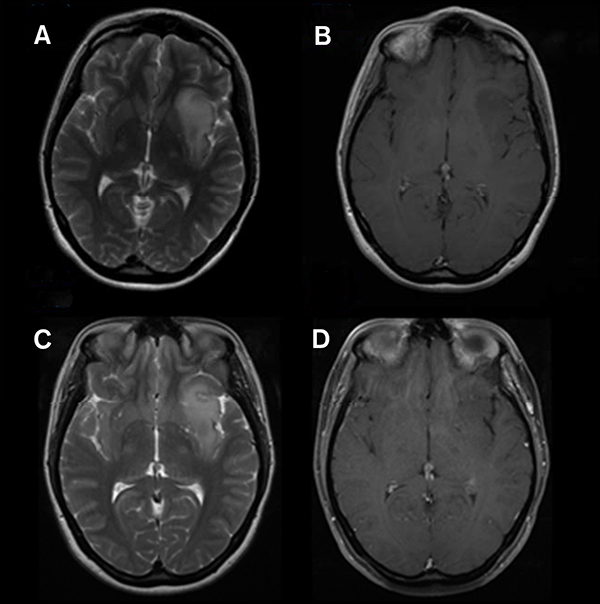 Figure 1: Axial T2 (A) and Axial T1-post GAD (B) images at presentation approximately five years ago. Axial T2 (C) and Axial T1-post GAD (D) images as of November 2014. Neuroradiologist reports no change following perusal of all images in both studies.
The Experts Weigh In
Mitchel Berger, MD, FAANS; San Francisco:
Click here to read this expert’s comments.
Andrew Kaye, MD; Melbourne, Australia:
Click here to read this expert’s comments.
Discussion
Adult low-grade gliomas are diffuse, intrinsic, slow-growing primary brain neoplasms that most commonly occur in otherwise healthy young adults. They are classified as WHO grade 2 tumors and frequently manifest mutations of the IDH1 gene with variable 1p and 19q deletions (oligodendroglial lineage) or p53 deletions (astrocytic lineage). They invariably progress to higher-grade gliomas. Surgery is generally not successful in complete extirpation of these tumors as they have indistinct borders and infiltrate normal surrounding brain, but a substantial debulking may accord a better prognosis and reduce the risk of malignant transformation. However, the risk of surgery, particularly in the dominant hemisphere, must be carefully considered, and an experienced surgeon would be a wise choice.
Results from the RTOG 9802 study released in 2012 suggest that early administration of fractionated radiation and chemotherapy may prolong survival in high-risk, low-grade glioma patients (over age 40 years and with less than total resection). However, neurotoxicity associated with radiation, and hematological toxicity associated with chemotherapy is not insignificant and must be carefully factored in. The relatively low incidence of these tumors and complex decision-making process preclude randomized controlled trials that would provide Class 1 evidence or evidence-based guidelines to manage this condition. Carefully individualizing each case and relying on the collective wisdom of a multidisciplinary tumor board or a more experienced colleague is prudent prior to any planned intervention.
 Vikram C. Prabhu, MD, MS, FAANS, is professor and residency program director at Loyola University Medical Center in Maywood, Ill. His practice is focused on neurosurgical oncology and peripheral nerve surgery. He is a member of the AANS Neurosurgeon Editorial Board and may be reached at vprabhu@lumc.edu. The author has no conflicts of interest to disclose.
Suggested Reading