AANS Neurosurgeon : AANS News
Volume 19, Number 3, 2010
Making the Message Count
Neurosurgeon's DVT Inspires His Public Outreach
Betsy van Die
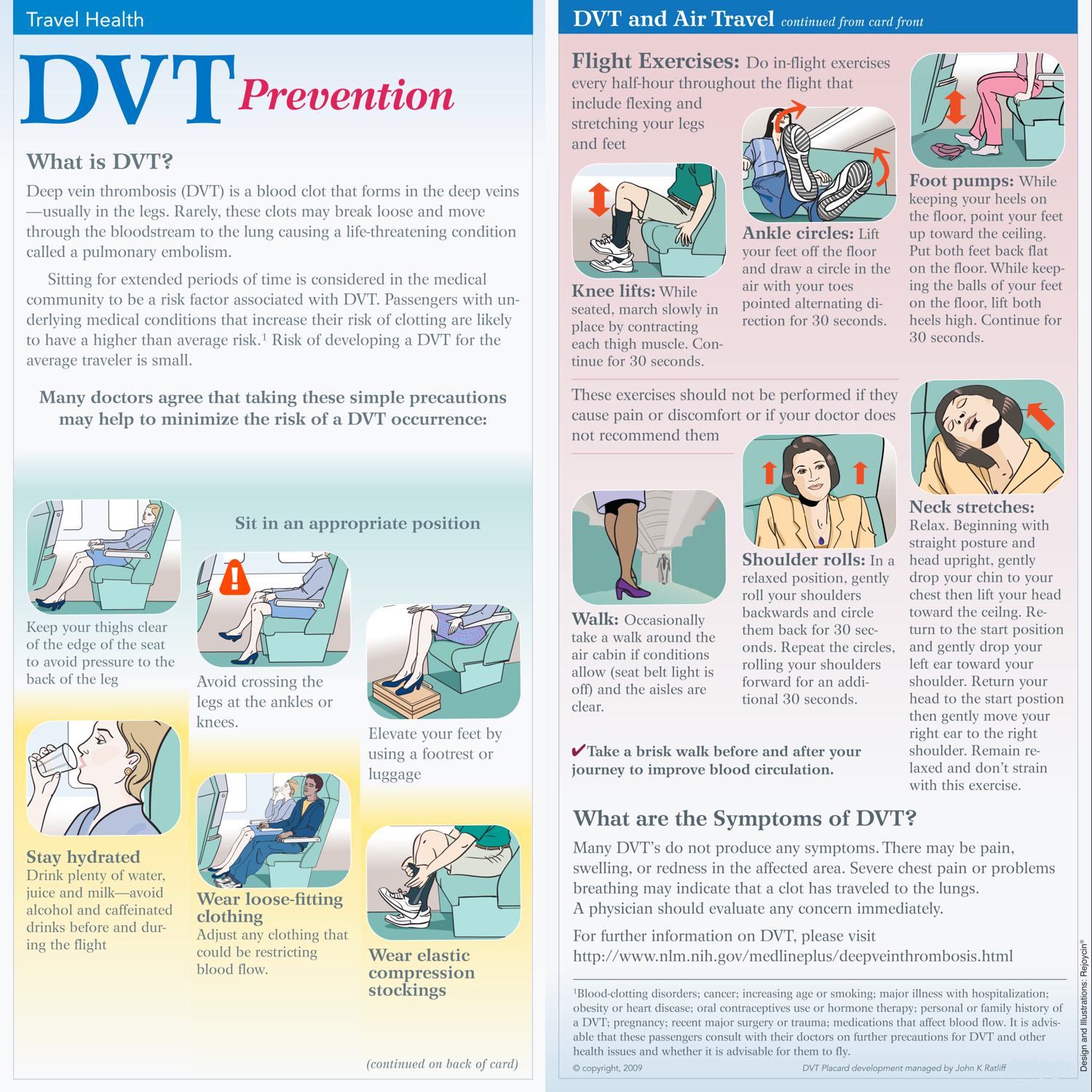
What does it take to reach the public with health information that can save lives? AANS member John K. Ratliff, MD, can answer that question firsthand, having recently launched a public awareness campaign on deep vein thrombosis called "Travel Healthy: Prevent DVT's."
"I am a neurosurgeon and initially missed the warning signs of my DVT five years ago, so it hit me hard that thousands of lay people were most likely missing the warning signs," Dr. Ratliff said. "While PreventDVT.org, a national DVT prevention coalition, has made strides in getting the word out, I decided to create a DVT placard targeting frequent travelers who are particularly susceptible to this condition."
The placard illustrates several simple exercises people can do to prevent DVTs and offers consumer-friendly information about the disorder. In addition, his "Deep Venous Thrombosis Prevention" Facebook page allows people instant access to the downloadable placards and offers them an ongoing forum for discussion about DVT.
The "Travel Healthy: Prevent DVT's" campaign has generated close to 230 local, regional and national articles and more than 233 million media impressions in Web, print and broadcast outlets throughout the U.S. and internationally. These include interviews with Dr. Ratliff on two TV news programs in Philadelphia, where he now lives, as well as for his hometown newspaper in Kentucky.
Dr. Ratliff based his campaign on the same key principles for implementing successful media campaigns that the AANS is using with excellent results in its many public information activities:
- Define a clear mission and goals for every campaign.
- Engage a seasoned media relations professional to create and implement the campaign.
- Develop a strong, focused and purposeful message for a clearly defined target audience.
- Create or acquire accurate, professionally executed Web content that supports the campaign.
- Prepare a media-savvy subject-area expert to be ready, willing and able to field interview requests.
- Devise a budget that balances campaign goals with financial capacity.
"I admire the passion, commitment and generosity John brings to his advocacy for DVT prevention," said Gail L. Rosseau, MD, AANS Public Relations Committee chair and a seasoned media spokesperson. "Those qualities, coupled with in-depth knowledge of the topic, are integral to the success of a media campaign."
When beginning development of the DVT prevention campaign early this year, Dr. Ratliff turned to professionals. He started with the DVT placards, for which he enlisted medical illustrator Denise Cotter. He also interviewed several public relations firms and was impressed with the down-to-earth style and strong healthcare and nonprofit background of Dava Guerin, president of Guerin Public Relations Inc. Shortly after first meeting with Dr. Ratliff in March, she sent him a detailed proposal. Working as a team they hammered out the mission, goals, talking points, and media pitching strategy for the DVT campaign.
"While the media appreciates health facts and statistics, to attain a more detailed story you really need a top expert in the field, a newsworthy medical issue and, if possible, access to a heartwarming first-person story," Guerin said. "Because of Dr. Ratliff's personal story and commitment to helping the public learn about DVT prevention, I knew this would be a compelling national media opportunity."
Timing can play a significant role in a campaign's degree of success. The team wisely focused on travelers and launched the DVT prevention campaign at a high-volume travel time, early summer.
As with any project, developing a budget that allows the goals of the project to be met cost-effectively is an essential part of the process. Although Dr. Ratliff financed the campaign independently of his institution, Thomas Jefferson University, the university supported the project through ancillary efforts of its public relations staff.
While the catalyst for the "Travel Healthy: Prevent DVT's" campaign was Dr. Ratliff's own encounter with DVT, neurosurgeons' patients more frequently are their inspiration for becoming involved in public awareness activities. Patients themselves may want to share their stories to help neurosurgeons inform the public about neurosurgical disorders and how to prevent them when possible, and about therapeutic interventions that may be available. As Dr. Ratliff shows, a neurosurgeon equipped with a solid media strategy can be a powerful messenger.
Betsy van Die is AANS communications director. The author reported no conflicts for disclosure.
For Further Information
AANS Member Media Kit (login required)
TV Interviews in Philadelphia, ABC affiliate; NBC affiliate